Affiliate disclosure: Chic Seed may earn a commission from some merchant links. Our recommendations remain independently edited and reader-first.
Bathroom organizers should make the routine easier without making the room feel like a supply closet.
The right option depends on product height, moisture, cleaning access, and whether you prefer open or closed storage.
Quick verdict
Choose storage that reduces visual noise and wipes clean easily.
What to look for
- fit: Check whether the recommendation works for the actual routine, not just for a photo or one special occasion.
- quality: Look for construction, materials, finish, care needs, or repeat-use signals that justify the price.
- value: The strongest option earns its space by being useful often enough to beat cheaper duplicates.
- maintenance: Care, storage, cleaning, battery life, or replacement parts matter more than most product pages admit.
- style: A good pick should blend into several outfits, rooms, schedules, or social situations without feeling forced.
Who this is for
Readers with skincare, makeup, hair tools, or shared bathroom counters.
Who should skip it
Skip open trays if products are mismatched and you dislike frequent tidying.
Practical buying notes
Look for washable materials, divided zones, non-slip bases, and room for tall bottles.
Useful comparisons
- If you care most about bathroom, choose the simpler option with fewer fragile details.
- If organization matters more, compare return policies and long-term upkeep before buying.
- If you are shopping for beauty, prioritize comfort and repeat use over trend language.
Editorial take
Good organization should make the counter calmer after a busy morning.
FAQ
Is this a product ranking?
It is an editorial guide, not a paid ranking. We focus on use case, tradeoffs, and value signals.
How often should readers revisit this advice?
Revisit it when your routine changes, when a product category updates, or when an older item stops solving the job.
Inventory the items that truly live on the counter
Remove everything, clean the surface, and return only items used daily. Measure the remaining bottles, tools, and electrical items before buying an organizer. A tray should contain drips without crowding the sink, while a closed container needs enough ventilation for its contents. Backup stock usually belongs in a cabinet rather than on display.
Choose materials for a wet environment
Bathroom organizers encounter water, product residue, heat, and frequent wiping. Glazed ceramic, suitable metal, glass, sealed stone, and washable synthetics have different maintenance needs. Untreated wood and natural fibers may stain or retain moisture unless designed for the environment. Protect porous countertops from oils and colored products.
Create visual warmth through texture
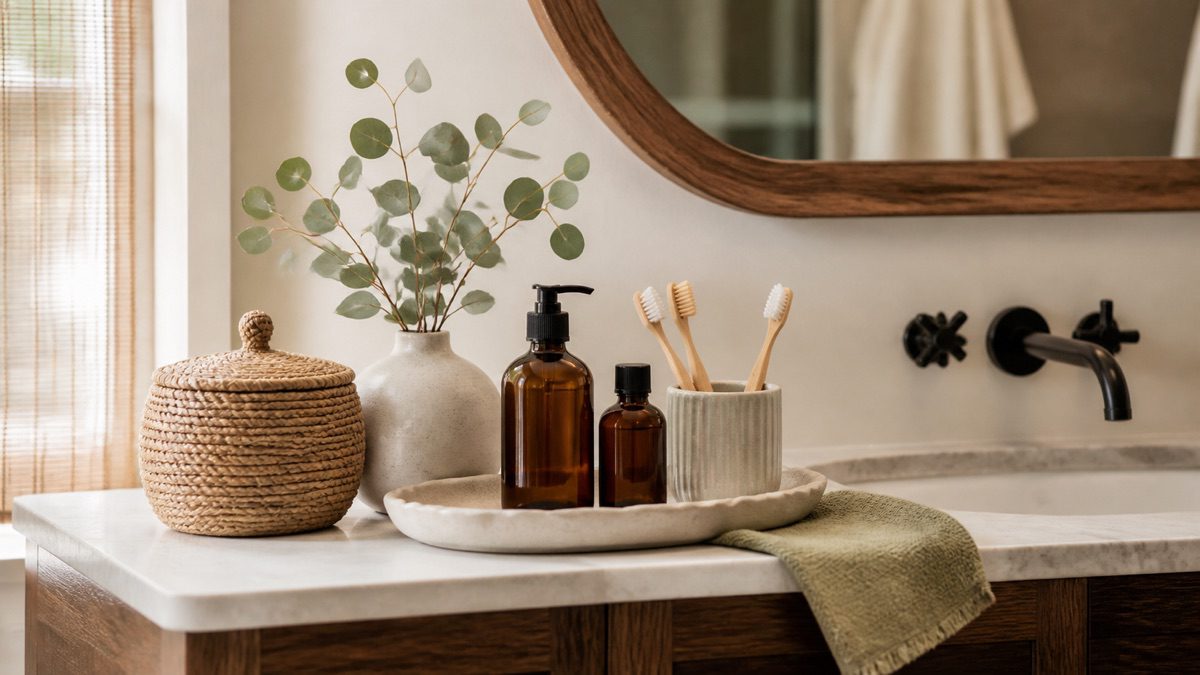
A limited material palette looks calmer than matching every container. One ceramic tray, an amber or clear bottle group, and a small woven or lidded element can soften the space without creating decorative clutter. Repeating a color already present in towels, cabinetry, or hardware helps the organizer feel integrated.
Keep hygiene and access visible
Toothbrushes need appropriate airflow and separation from cleaning products. Frequently touched containers should be easy to wipe, and cotton products should stay protected from splashes. Keep electrical cords and appliances away from water and follow manufacturer and local electrical-safety guidance.
Countertop checklist
- Only daily-use products remain visible.
- The organizer fits without blocking the basin.
- Materials tolerate moisture and cleaning.
- Small items are protected from splashes.
- The whole setup can be lifted and wiped quickly.
Related ChicSeed guides
Continue with these practical guides from the same topic area:
