Affiliate disclosure: Chic Seed may earn a commission from some merchant links. Our recommendations remain independently edited and reader-first.
Small apartments need scent choices that feel clean, not overpowering.
Candles, diffusers, room sprays, and fresh-air habits each work differently in compact rooms.
Quick verdict
Choose control and ventilation over intensity.
What to look for
- fit: Check whether the recommendation works for the actual routine, not just for a photo or one special occasion.
- quality: Look for construction, materials, finish, care needs, or repeat-use signals that justify the price.
- value: The strongest option earns its space by being useful often enough to beat cheaper duplicates.
- maintenance: Care, storage, cleaning, battery life, or replacement parts matter more than most product pages admit.
- style: A good pick should blend into several outfits, rooms, schedules, or social situations without feeling forced.
Who this is for
Readers who want a home that feels calm without heavy fragrance.
Who should skip it
Skip strong diffusers if you share walls, have pets, or get headaches from scent.
Practical buying notes
Start with clean textiles, trash rhythm, and airflow before adding fragrance.
Useful comparisons
- If you care most about home scent, choose the simpler option with fewer fragile details.
- If small apartments matters more, compare return policies and long-term upkeep before buying.
- If you are shopping for calm, prioritize comfort and repeat use over trend language.
Editorial take
A good home scent is noticed gently and never explains itself loudly.
FAQ
Is this a product ranking?
It is an editorial guide, not a paid ranking. We focus on use case, tradeoffs, and value signals.
How often should readers revisit this advice?
Revisit it when your routine changes, when a product category updates, or when an older item stops solving the job.
Remove odor sources before adding fragrance
Fragrance works best in a clean, ventilated room. Empty bins, wash textiles, clean drains as appropriate, and address dampness, cooking residue, pet areas, or stale air first. Scent should not be used to conceal a maintenance or safety problem. Open windows when conditions allow and follow building guidance for ventilation.
Choose one scent direction
Several competing products can make a small apartment feel stronger than intended. Select one main family—such as citrus, herbal, woody, or soft floral—and use a lighter supporting note if needed. Start with the lowest practical intensity and spend time outside the room before reassessing, because occupants become accustomed to fragrance quickly.
Match the format to the room
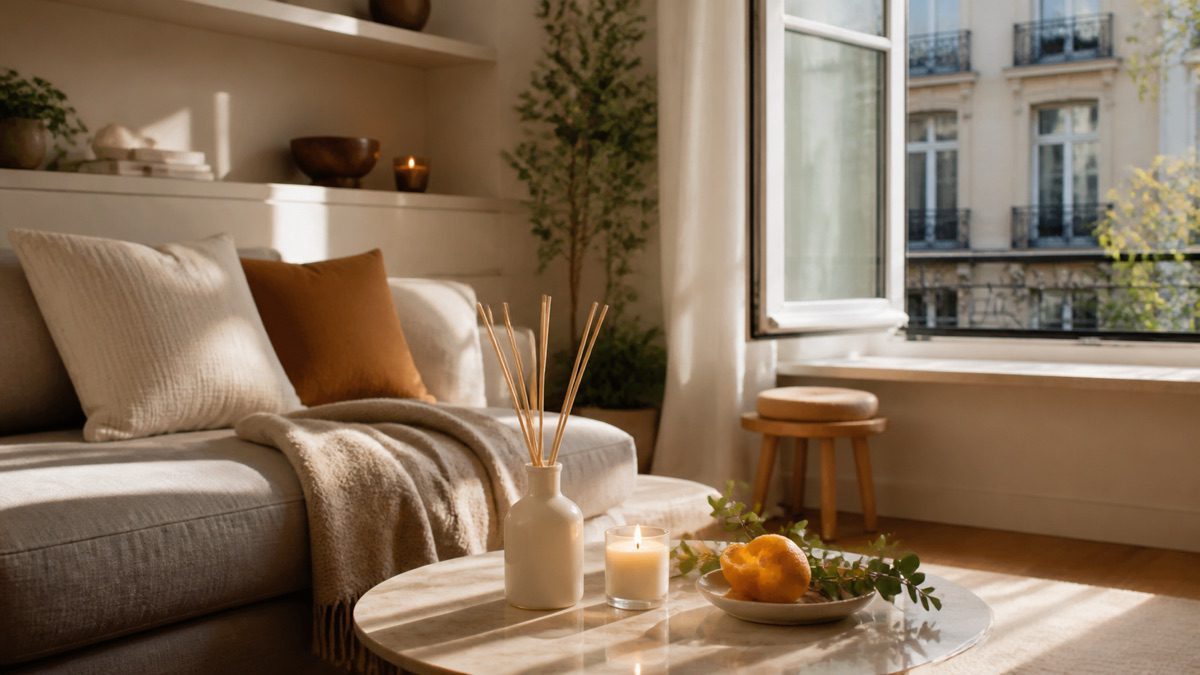
Reed diffusers provide continuous fragrance but need careful placement away from children, pets, heat, and delicate surfaces. Candles add atmosphere but require active supervision and adequate clearance. Sprays offer short-term control, while simmering ingredients introduces heat and moisture. Always follow product warnings and consider fragrance sensitivities, pets, and household respiratory needs.
Use placement to control intensity
A source near an entry can create a brief first impression without filling every room. Avoid placing strong fragrance beside the bed, dining table, workstation, or air return. In a studio, use fewer reeds or shorter exposure rather than adding products in multiple zones. Protect wood and stone from oils and spills.
Small-space scent checklist
- Ventilation and cleaning have been addressed first.
- Only one primary scent family is active.
- Placement follows fire, pet, and child-safety guidance.
- Intensity remains comfortable after returning from outside.
- Guests can request a fragrance-free environment.
Related ChicSeed guides
Continue with these practical guides from the same topic area:
