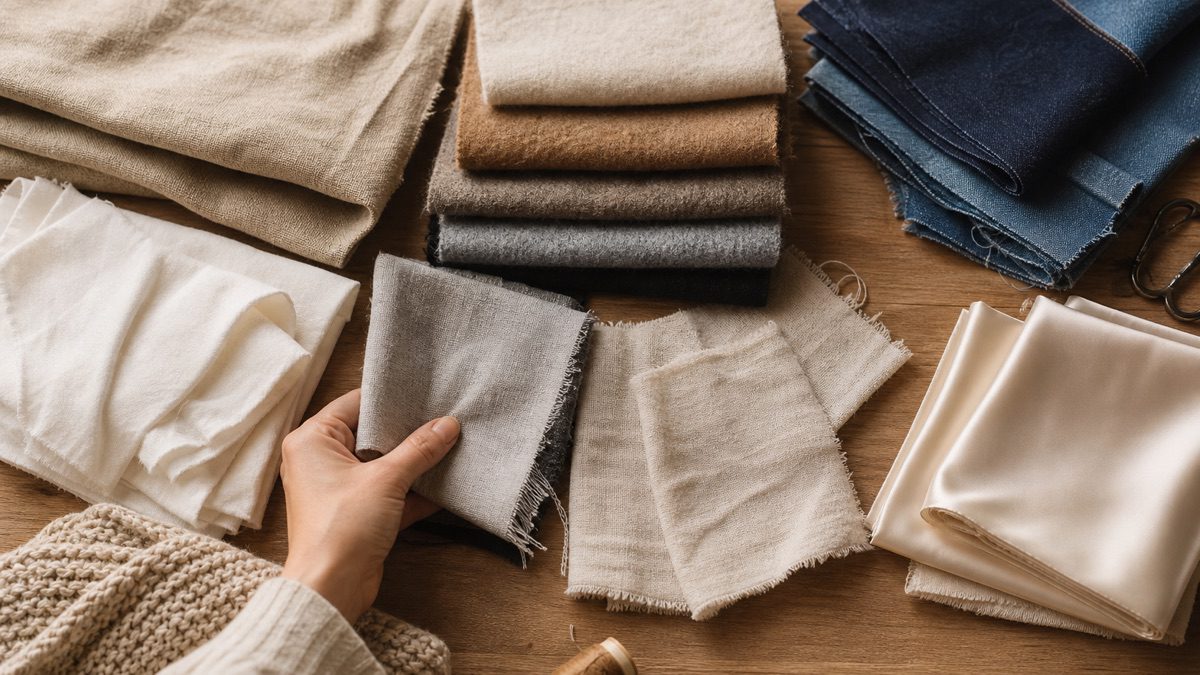
Understand common clothing fabrics, blends, care needs, comfort, and durability so you can make more informed wardrobe purchases.
Cotton and linen
Cotton is breathable and familiar, but its performance varies by weave and weight. Poplin feels crisp, jersey stretches, and denim is built for abrasion. Linen releases heat well and softens with wear, although it wrinkles easily. Blends can reduce creasing, but a small synthetic percentage does not automatically make a garment poor quality.
Wool and animal fibers
Wool can regulate temperature and resist odor, which makes it useful beyond heavy winter sweaters. Fine merino feels different from rustic wool, and fiber length, spinning, and finishing affect softness. Cashmere can be warm and light but is vulnerable to friction. Look for dense, resilient fabric rather than judging by the label alone.
Viscose and related fibers
Viscose, rayon, modal, and lyocell begin with cellulose and are processed into soft, draping fibers. They can feel cool and fluid, but some versions weaken when wet or shrink without careful washing. Check whether the garment is lined, whether seams carry weight well, and whether the care instructions match your routine.
Polyester, nylon, and elastane
Synthetic fibers can add strength, stretch, quick drying, and wrinkle resistance. They may also retain odor or feel less breathable in dense constructions. Nylon often performs well in outerwear and travel pieces. Elastane improves movement, but high-stretch garments can lose recovery when exposed to repeated heat.
Read the whole garment
Composition is only one clue. Hold the fabric to light, stretch it gently, inspect seam puckering, and feel whether it returns to shape. Consider lining, hardware, hem depth, and stress points. A suitable, well-constructed blend can outlast a poorly made garment in a prestigious natural fiber.
Frequently asked questions
Is natural fabric always better?
No. Suitability, construction, care, and intended use matter more than a simple natural-versus-synthetic rule.
What fabric is best for hot weather?
Lightweight linen, cotton, and some breathable cellulose fabrics are common choices.
Why do clothes pill?
Friction brings loose or broken fibers to the surface; short fibers and soft high-friction areas pill faster.
Do fabric blends last longer?
Some blends improve strength or recovery, while others are chosen mainly for cost or feel.
How can I judge fabric online?
Use composition, weight, close-up photos, care instructions, reviews, and the return policy together.
Test fabric behavior, not only softness
A fabric can feel appealing on a hanger yet perform poorly during use. Gently scrunch an inconspicuous area to observe creasing, check whether the surface catches easily, and look for light through the weave. Stretch fabrics should recover rather than remain distorted. For online purchases, close-up photographs, fabric weight, lining information, and customer-service measurements can be more informative than marketing adjectives.
Include care in the value calculation
Dry cleaning, hand washing, drying space, ironing, pilling removal, and color separation all affect whether a garment remains useful. Review the complete care label before removing tags. If the recommended routine is unrealistic, choose a different construction or fiber blend rather than assuming the instructions can be ignored without changing fit, color, or lifespan.
Fabric buying checklist
- The weave and weight suit the intended season.
- Opacity works with available underlayers.
- Stretch returns to its original shape.
- Surface texture tolerates expected friction.
- Care requirements fit the household routine.
Related ChicSeed guides
Continue with these practical guides from the same topic area:
