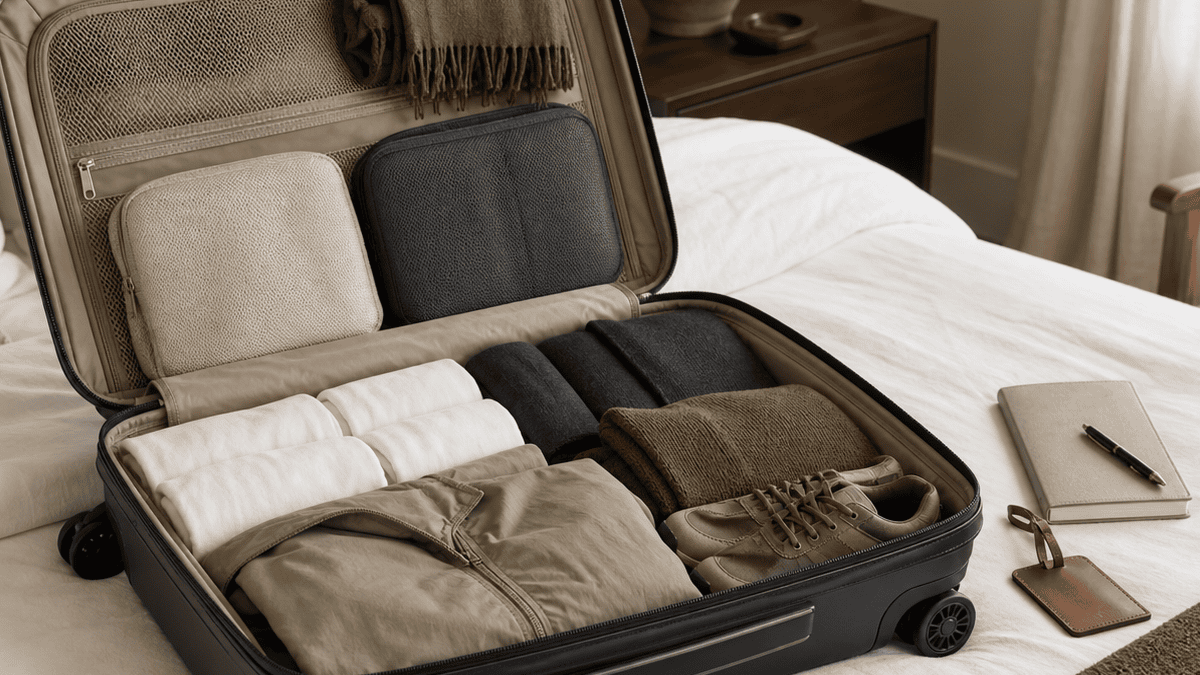
A practical travel wardrobe gives you enough options without making you manage a different outfit for every day. The goal is not the smallest possible suitcase. It is a coordinated set of comfortable pieces that suits the weather, activities, laundry access, and local expectations of your trip.
Translate the itinerary into clothing needs
List planned activities and assign a practical dress requirement to each: long walking day, casual meal, formal reservation, beach, outdoor excursion, or transit. Group similar requirements. A ten-day city trip may need only three clothing categories, while a four-day event trip might require more specialized pieces.
Check the full weather pattern
Look beyond the daily high temperature. Evening lows, rain probability, wind, humidity, indoor air conditioning, and elevation can change what feels comfortable. Choose layers that work together rather than packing one bulky item for each condition.
Choose three outfit formulas
Examples include trousers with a tee and overshirt, a dress with a light knit, or jeans with a blouse and jacket. Repeat each formula with different pieces. This creates variety while keeping shoes and outerwear consistent.
Build a compact packing list
- Four or five tops, including at least one layer-friendly option
- Two or three bottoms that can be reworn
- One dress or alternate outfit for a change of silhouette
- One light layer and one weather layer
- Two pairs of shoes with different functions
- Sleepwear, undergarments, and activity-specific items
- A scarf or compact accessory for warmth and variation
Limit footwear by function
Shoes consume space and can determine whether a trip feels comfortable. For most itineraries, one supportive walking pair and one cleaner or more weather-specific pair are enough. Wear the bulkier pair during transit. Do not bring unworn shoes unless you have tested them for a full day.
Plan one realistic laundry moment
For trips longer than a week, a small amount of laundry can reduce luggage significantly. Confirm whether you will have a machine, hotel service, or space to hand-wash and dry. Quick-drying underlayers are more useful than an entire wardrobe of technical fabric.
Pack in outfits, not categories
Lay every item on the bed and assemble complete outfits, including shoes and outerwear. Photograph each combination. Remove pieces that work with only one outfit unless they are required for a specific event. Keep travel-day clothing in the same palette so it can be reused.
Leave deliberate empty space
A tightly packed suitcase is difficult to manage and leaves no room for small purchases. Aim to leave roughly ten percent of the case free. A foldable tote can handle groceries, beach items, or the return journey without becoming a second full suitcase.
Frequently asked questions
How many outfits should I pack for one week?
Pack enough components for several combinations rather than seven fixed outfits. Three formulas usually create adequate variety.
Should I use packing cubes?
They help organize categories and compress soft items slightly, but they do not reduce the weight of what you pack.
What should go in a personal item?
Keep medication, documents, valuables, chargers, a light layer, and one basic change of clothes with you.
How do I avoid overpacking?
Define the itinerary first, use one palette, limit shoes, and remove single-use “just in case” pieces.
Is it better to roll or fold clothes?
Rolling works well for casual knits and small items. Folding is usually better for structured garments. A combination is most practical.
Related ChicSeed guides
Continue with these practical guides from the same topic area:
- How to Pack Shoes Without Filling Your Suitcase
- A Carry-On Toiletries Checklist That Stays Compact
- How to Pack for a Weekend Trip in One Small Bag
- How to Choose a Travel Jewelry Case
Once the wardrobe is chosen, pack it so it arrives wearable: how to fold and roll clothes so a carry-on stays neat.
