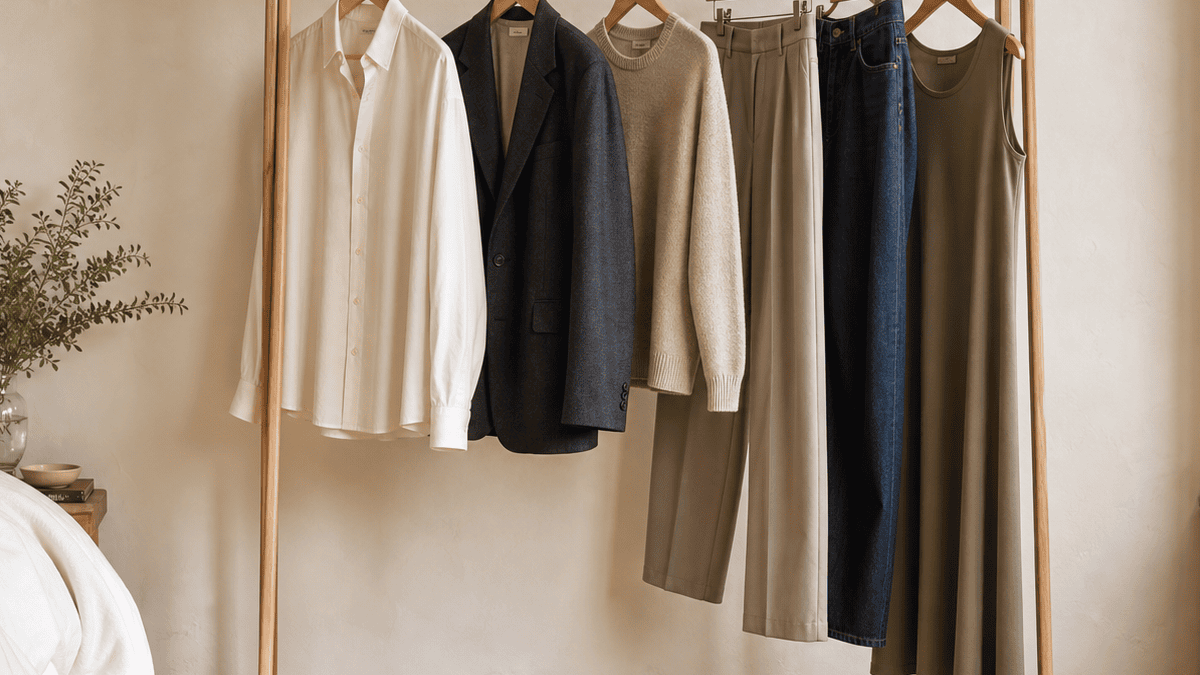
A capsule wardrobe is a small, coordinated collection of clothes that covers most of your real life. It is not a strict uniform or a reason to throw everything away. The useful version starts with what you already wear, fills genuine gaps, and makes getting dressed easier.
Start with your actual week
Before choosing colors or counting garments, write down how you spend a normal seven-day period. Someone who works from home, walks often, and goes out once a week needs a different wardrobe from someone who commutes to a formal office. Estimate the percentage of time spent at work, at home, exercising, socializing, and attending special events. Your closet should reflect those percentages.
Audit before you shop
Pull out the pieces you wore repeatedly during the last month. Notice what they share: silhouette, fabric, color, care requirements, and comfort level. Set aside items that do not fit, require constant adjustment, or belong to an imagined lifestyle. You do not need to discard them immediately; a temporary storage box makes the decision reversible.
Choose a flexible palette
Select two or three neutrals that already dominate your wardrobe, then add one or two accent colors you genuinely enjoy wearing. A palette might include charcoal, cream, and denim with olive and rust as accents. The goal is compatibility, not visual sameness. Prints can work well when they include colors that repeat elsewhere in the capsule.
Build around outfit formulas
An outfit formula is a repeatable combination rather than a specific outfit. Useful examples include straight-leg trousers plus a knit and loafers, jeans plus a button-down and jacket, or a simple dress plus a cardigan and boots. Aim for three to five formulas that suit your schedule. Each garment should participate in more than one formula.
A practical starting checklist
- Three to five tops that work alone or under a layer
- Two or three knitwear or lightweight layering pieces
- Three bottoms suited to your most common activities
- One easy dress or alternative one-piece outfit, if useful to you
- One structured layer and one weather-appropriate outer layer
- Two or three pairs of shoes that cover daily walking, work, and social plans
- A small group of accessories that change proportion or color
Use a waiting list for purchases
Keep a note on your phone titled “wardrobe gaps.” Record the item, the outfits it would complete, and the situations where you needed it. Wait at least a week before buying. If the same gap appears repeatedly, define your requirements—material, color, measurements, care, and budget—before browsing.
Frequently asked questions
How many pieces should a capsule wardrobe contain?
There is no universal number. Around 20–30 seasonal pieces is a manageable starting point, but climate, laundry frequency, dress codes, and hobbies matter more than the count.
Do shoes and accessories count?
They can, but counting is optional. Treat the number as a planning tool, not a test.
Can a capsule wardrobe include trends?
Yes. A trend is useful when it fits your established outfits and you expect to wear it after the initial excitement fades.
How often should the capsule change?
Review it when the weather or your routine changes. Small adjustments are usually enough.
What should I do with pieces outside the capsule?
Store occasion wear, sentimental pieces, and off-season clothing separately. A capsule does not need to represent every item you own.
Related ChicSeed guides
Continue with these practical guides from the same topic area:
